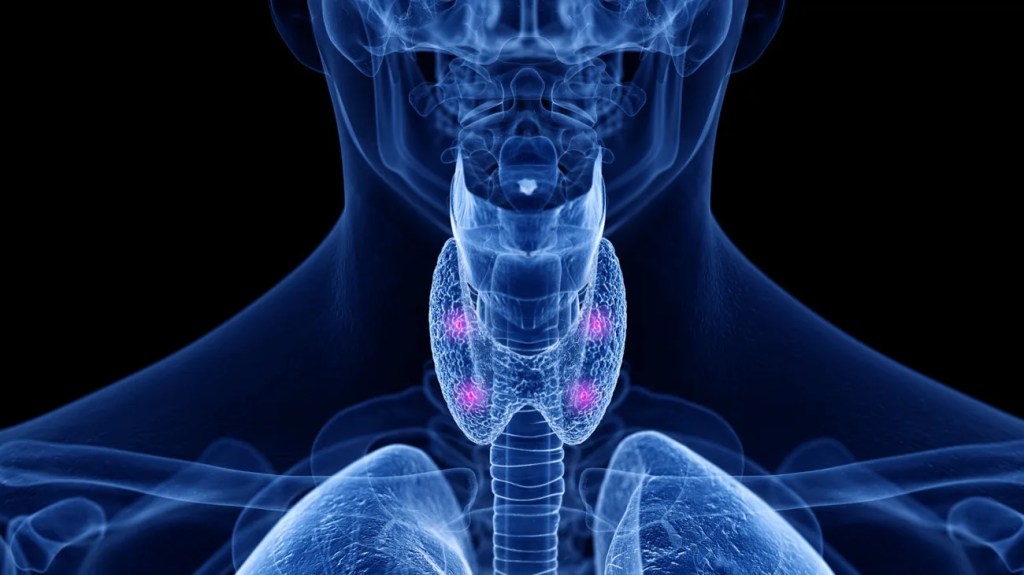
Dr. Sewon Bann (PGY4 in Endocrinology) gave an engaging and thorough noon rounds on Approach to Hypercalcemia. Review the slide deck here.
Key takeaway points:
- Physiology of calcium regulation:
- PTH results in net ↑ Ca, ↓ phos, ↑ 1,25 vit D
- ↑ bone resorption of Ca
- ↑ renal rabsorption of Ca
- ↑ conversion of 25 vit D to 1,25 vit D
- 1,25 Vit D results in net ↑Ca, ↑ phos, ↓ PTH
- ↑ gut absorption of Ca
- ↑ bone resorption of Ca
- ↑ renal reabsorption of Ca
- PTH results in net ↑ Ca, ↓ phos, ↑ 1,25 vit D
- Work up of hypercalcemia:
- Confirm hypercalcemia
- Measure PTH
- Elevated/ normal PTH (i.e. PTH-mediated)
- Primary hyperparathyroidism
- Consider FHH if family history or low urine calcium (FeCa < 0.01)
- Tertiary hyperparathyroidism (if long-standing renal failure)
- Other (drug mediated e.g. Lithium, ectopic PTH due to malignancy)
- If suppressed PTH (i.e. non-PTH mediated), hypercalcemia could be due to:
- High 25-hydroxyvitamin D (vit D excess)
- High 1,25-dihydroxyvitamin D (granulomatous disease, heme malignancy)
- Malignancy (from PTHrP or osteolytic bone metastases e.g. MM, met breast cancer)
- If none of the above, consider immobility, drugs (vitamin A, thiazides, aromatase inhibitors, teriparatide), renal injury, endocrinopathies e.g. pheo, acromegaly
- Elevated/ normal PTH (i.e. PTH-mediated)
- Vitamin D toxicity:
- Serum 25-OH vit D levels do not correlate well with clinical severity! There are reports of toxicity with levels of ~200 nmol/L as well as no symptoms with ~800 nmol/L


 Vancouver IM LMR
Leave a comment