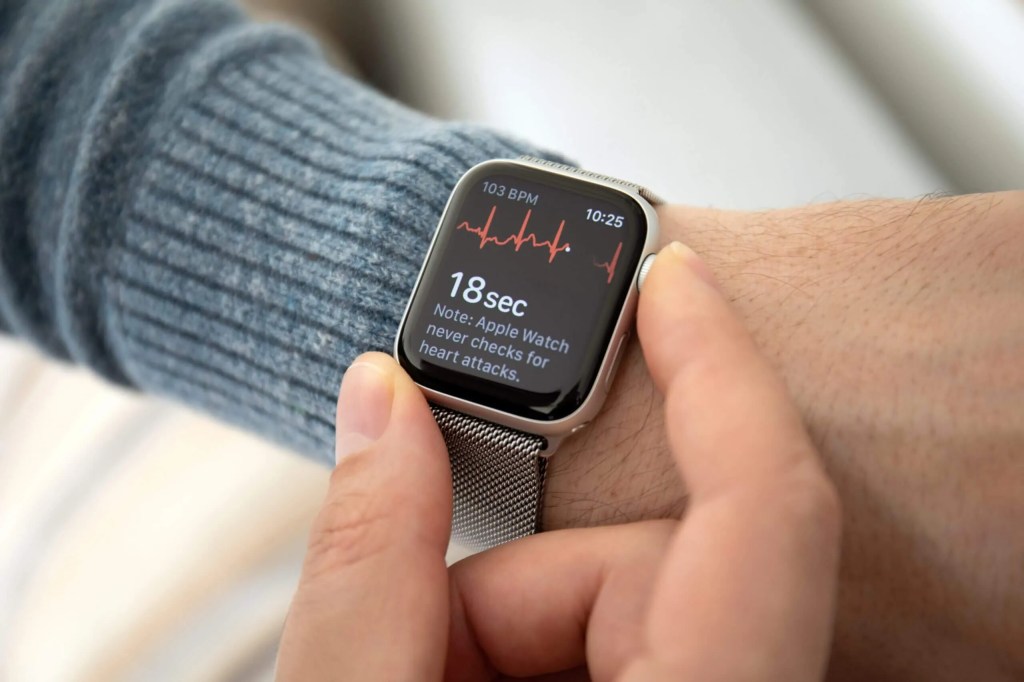
Future cardiology fellow Jacky Tang (PGY3) gave a riveting, evidence-filled presentation today on subclinical atrial fibrillation, which will become more and more relevant as wearable devices become more widespread.
See the didactic slide deck here.
Key points:
- Subclinical AF (SCAF) is defined as atrial fibrillation that is asymptomatic and incidentally detected on device or intentional long-term monitoring (can be on consumer wearables like smartwatches or medical professional devices like Holter monitors, PPM/ICD/CRTs, or ILRs).
- Should we anticoagulate SCAF?
- Three major trials were discussed:
- LOOP trial (2021): in patients with CHA2DS2-VASc ~4, implanting a screening ILR and anticoagulating AF > 6 minutes in duration did not significantly reduce risk of stroke or major bleeds
- NOAH-AFNET (2023): in patients with CHA2DS2-VASc ~4 with SCAF ≥ 6 minutes in duration detected on implantable cardiac devices, anticoagulation did not reduce composite outcome of CV death, stroke, and systemic embolism but did increase major bleeding +/- death
- ARTESiA (2024): in patients with CHA2DS2-VASc ~4 with SCAF between 6 minutes to 24h in duration detected on implantable cardiac devices, anticoagulation compared to ASA reduced stroke and systemic embolism while also increasing major bleeding
Takeaways:
- Patients who wear smart watches tend to be healthier than those studied in RCTs and are generally at very low annual risk of stroke
- Even if SCAF is picked up, there is not a lot of strong evidence to jump straight to anticoagulation
- Currently we do not believe there is a role for consumer wearable AF screening!



 Vancouver IM LMR
Leave a comment