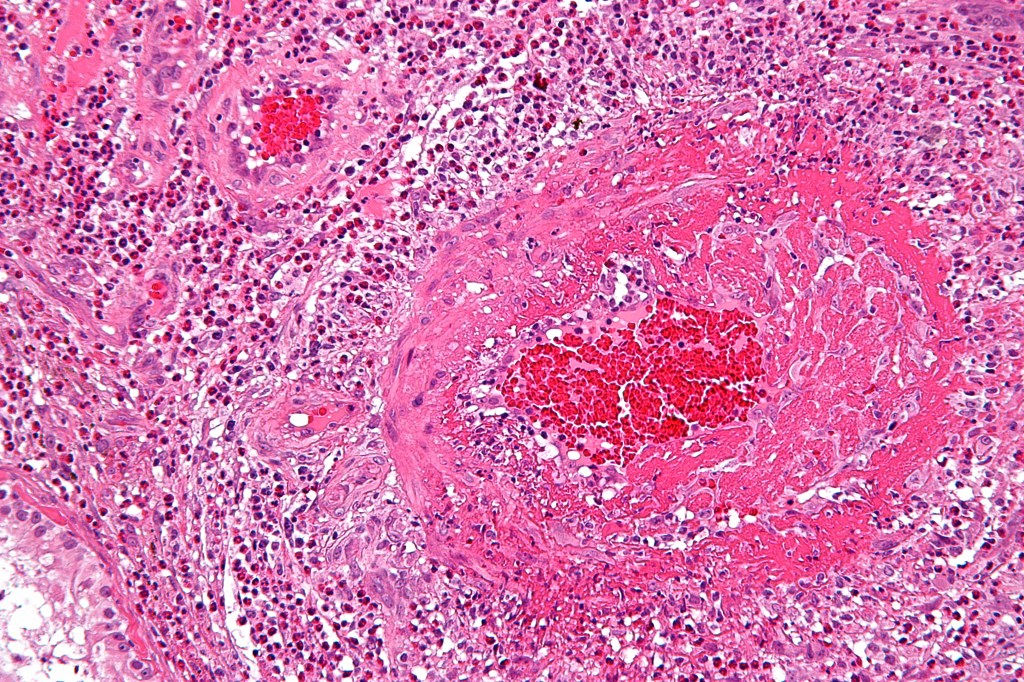
Thanks to Dr. Daniel Ennis for an amazing talk on eosinophilic granulomatosis with polyangiitis (and humbly did not mention that he contributed to the 2021 Canadian guidelines for ANCA vasculitis)
See the slides from the presentation here
Quick plug as well for Dr. Ennis’ two podcasts: Around the Rheum, St Paul’s Morning Report
Some summary points:
- Several classification criteria for eGPA have existed over the years, primarily intended to differentiate eGPA from other vasculitis syndromes. Drawbacks – These criteria often do not help us differentiate eGPA from other eosinophilic disorders, and you can meet criteria without a specific vasculitis manifestation.
- We can use the natural history of eGPA to our advantage in assessing these patients – eg 90-100% of patients will have asthma in the prodromal phase, therefore if there is no history of asthma it is unlikely that this patient has eGPA.
- ANCA is positive in 6-48% of eGPA cases, and 90% of positives will be MPO. Note that ANCA positivity actually gives a negative score in the ACR criteria because ANCA positivity is more likely associated with another vasculitic syndrome.
- ANCA positivity can correlate with a phenotype of vasculitis with higher relapse risk, compared to ANCA negative cases where the phenotype is more infiltrative and has higher mortality risk (cardiomyopathy, GI)
- Five factor score looks at end organ damage to estimate prognosis – 1 point for each, score of 1 or more suggests severe disease.
- Renal insufficiency (Cr > 1.58 mg/dL ~ 140), proteinuria > 1g/d, GI involvement, cardiac involvement, CNS involvement).
- Some consider eye or peripheral neurological involvement to count, as it has high morbidity despite no worsening of prognosis.
- Biologic of choice (in addition to steroids) is cyclophosphamide if severe/life-threatening disease, but evidence is mounting for use of rituximab for induction in eGPA (ritux previously excluded in eGPA trials)



 Vancouver IM LMR
Leave a comment