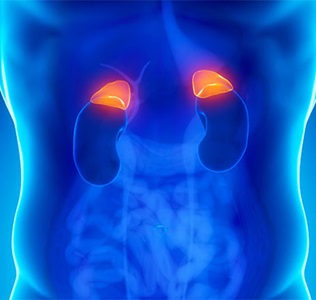
Thanks Helen Zhao for the excellent review of adrenal incidentalomas!
Slides are available here!
Clinical pearls:
- Assessment guided by answering two main questions:
- Is the adrenal mass benign or malignant? – answered by imaging
- Is the adrenal mass functional (secreting hormones)? – answered by clinical assessment, biochemical workup of hormone excess (cortisol excess eg Cushings/MACS, pheochromocytoma +/- hyperaldosteronism and androgen secretion)
- Wisdom from our HTN specialist Dr. Kuyper
- Hyperaldosteronism
- Confirmatory testing for hyperaldosteronism (eg saline suppression, oral salt load) does not have great test characteristics and can put your patient into heart failure.
- Generally in unclear situations, interfering medications (eg beta-blockers, ACEi/ARB, CCB, diuretics) may be held and then plasma aldosteronine and renin are re-checked. At this point, it is best to involve a Hypertension specialist (eg HTN clinic) to have this test conducted and interpreted properly!
- Pheo workup
- Plasma catecholamines actually preferred but not available here. We order 24 hour urine catecholamines/metanephrines (remember to always include 24 hour creatinine to assess for adequate collection!)
- Hyperaldosteronism
- In bilateral adrenal incidentaloma, also check 17-hydroxyprogesterone (?congenital adrenal hyperplasia) and screen for adrenal insufficiency if suspected clinically.
- General principles of adrenal incidentaloma management
- Cancer or unilateral benign mass with clinically significant hormone excess -> surgery
- Benign mass without clinically significant hormone excess -> leave alone + repeat imaging in 6-12 months to exclude significant growth



 Vancouver IM LMR
Leave a comment